Top Signs You Need Garage Door Service – Don’t Ignore These
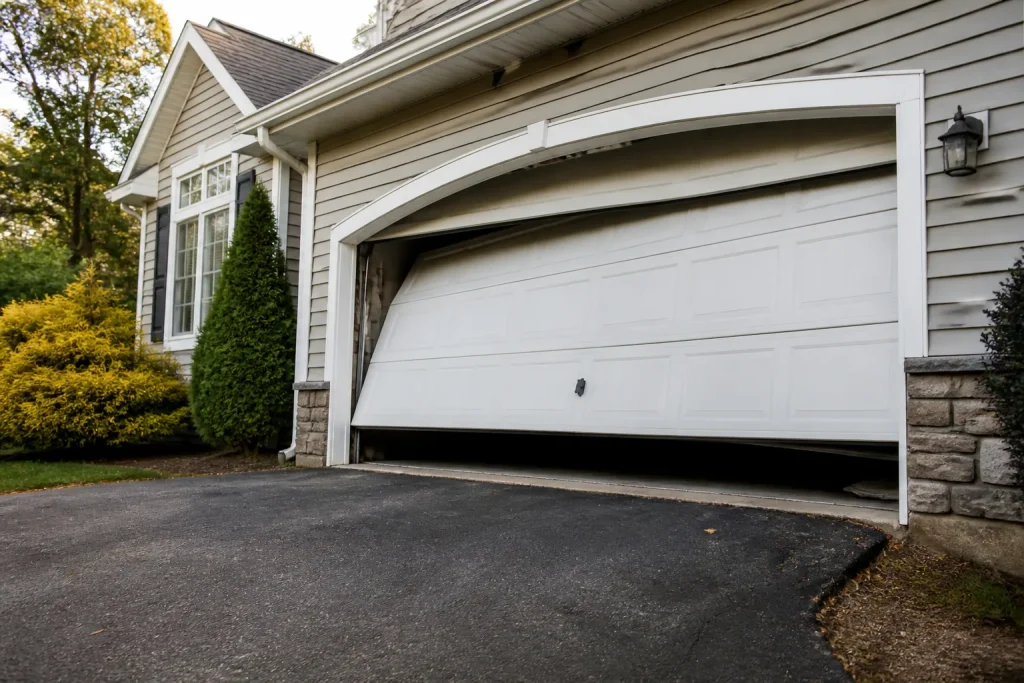
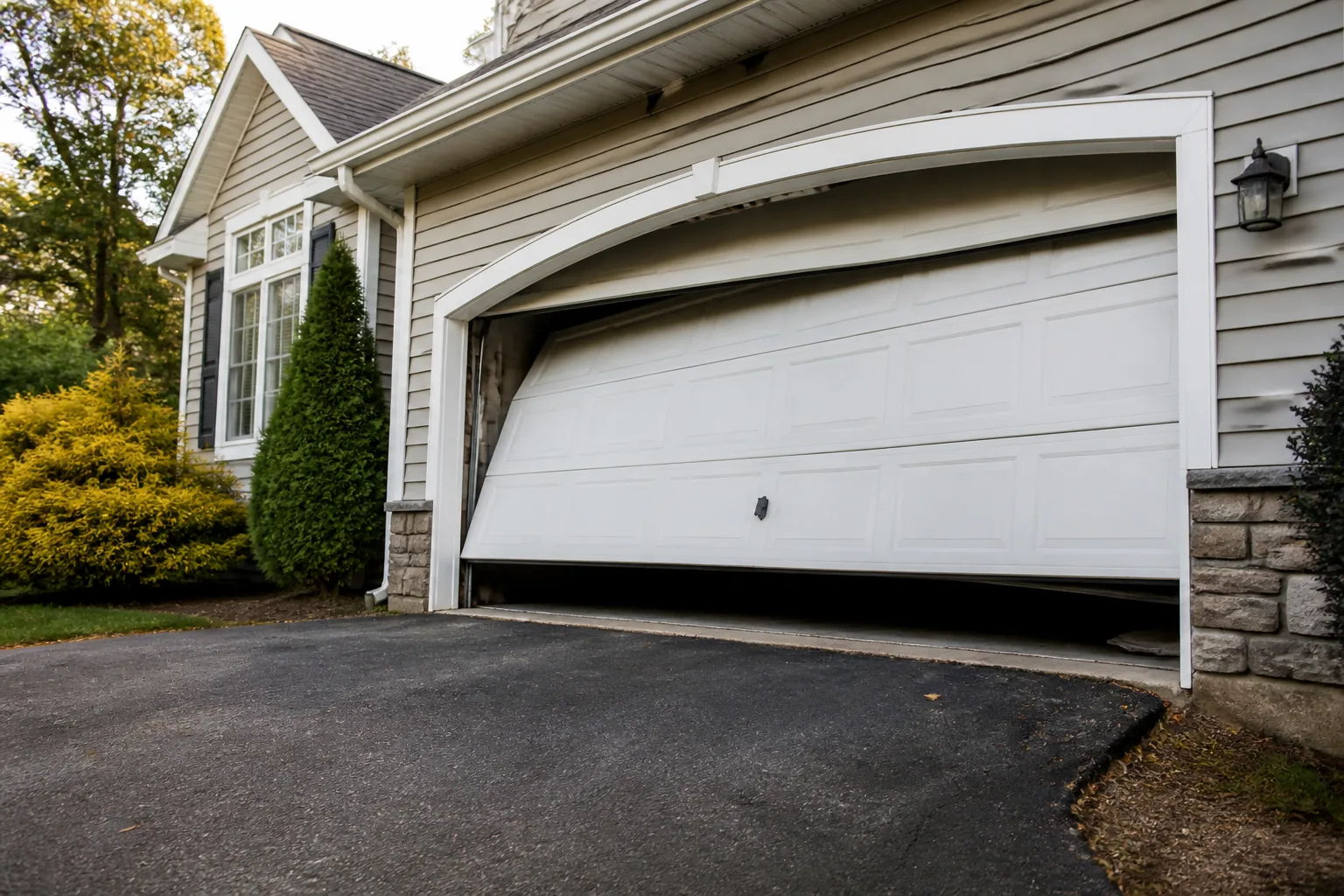
The signs you need garage door service in Woburn usually show up weeks before the door actually fails: a slightly slower opener, a new squeal at the halfway point, or a bottom seal that’s started to sag. The trouble is that a garage door fails so rarely that most homeowners have no baseline to compare against, so they chalk it up to “it’s just an old door” and wait. Here’s the honest version: nearly every expensive garage door repair we see started as a warning sign somebody noticed and dismissed.
If you’d rather skip the guesswork, call (877) 792-5970. Estimates are free.
Key Takeaways
- A door that’s slower, noisier, or wobblier than it used to be is giving you component-level information, not just an inconvenience.
- The 30-second manual balance test tells you whether your springs are carrying their share of the load.
- Different sounds point to different parts – grinding is not the same problem as popping.
- New England temperature swings age springs and wood panels faster than steady climates do.
- A door that fails the auto-reverse test is a safety problem first and a repair second.
Why Does Your Garage Door Feel Slower Than It Used To?
If your garage door feels slower than it used to, the most likely cause is spring tension that has drifted below spec, which forces your opener’s motor to work harder on every cycle. Springs carry the weight of the door; the opener just guides it. When springs weaken, the opener takes over load it was never designed to carry, and the whole cycle slows down while the motor heats up.
In Woburn, this one hides well because it happens gradually. You don’t notice a door getting a half-second slower each month, but your opener does. It’s the difference between replacing a spring and replacing an opener that burned itself out compensating for a weak one, and that gap is the single most common avoidable cost we see.
The same slowdown can also come from:
- Worn rollers that drag instead of roll, especially the original steel ones.
- A door out of balance after a panel was bumped or a track shifted.
- Opener force settings that were adjusted upward at some point to mask a spring problem.
- Cold-season drag from a stiff bottom seal pressing against the floor.
If your door is a LiftMaster or Chamberlain unit, a slowing cycle is one of the first clues that the electronics are compensating for a mechanical problem underneath. Our garage door opener repair work starts by figuring out whether the opener is actually the failing part, or the victim.
What Does the 30-Second Manual Balance Test Tell You?
The manual balance test tells you whether your torsion or extension springs are still carrying the door’s weight. You don’t need tools and you don’t need to touch anything under tension. Here’s how it works:
- Close the door fully and pull the release cord to disconnect the opener. If the door has no release cord or it won’t pull, stop here and call a pro.
- Lift the door by hand to about waist height. It should feel heavy but manageable.
- Let go at halfway. A healthy door stays put, roughly where you left it.
- If it sinks to the floor on its own, the springs have lost tension. If it rises on its own, they’re over-tensioned.
A door that drops or rises is telling you the spring system is out of spec. Either way, don’t try to adjust the springs yourself. Torsion springs store enormous mechanical energy, and a spring under tension can release it instantly. This is the one part of a garage door where we’d tell our own neighbors the same thing: leave it to trained technicians. Spring failure is a safety issue, not just an inconvenience.
Run this test every few months, and once more before winter sets in. Our garage door spring repair handles torsion and extension systems for the brands we work on every day, and our technicians have up to 10 years of experience reading exactly what a failed balance test means.
What Do the Noises Actually Mean?
The noise your garage door makes is a diagnostic tool, and each sound points at a specific component. Generic advice says “lubricate it,” which is like telling someone to take an aspirin for a broken arm. Here’s what each sound is usually telling a Woburn homeowner:
- Grinding: metal-on-metal contact, most often a dry or seized roller bearing or a torsion spring starting to bind. Grinding gets worse fast and should be looked at quickly.
- Squealing: friction at the hinges, rollers, or the opener’s drive. On a belt-drive Genie it can also mean a worn belt or a pulley running dry.
- Popping: a torsion spring that has slipped or is failing, or a cable jumping its drum. This one gets treated as urgent for good reason.
- Rattling: loose hardware – hinge bolts, track brackets, or the opener’s mounting. Usually the cheapest thing on this list to fix and the easiest to ignore.
- A bang followed by a door that won’t lift: a broken spring, almost certainly. Stop using the door and call.
Raynor and Clopay doors use different hardware than a Wayne Dalton, and a technician who works on all of them knows the difference between a normal break-in creak and a component that’s about to give. When the sound says “urgent,” stuck open or stuck closed, we treat it as urgent.
What Should You Look At on a Visual Inspection?
A five-minute visual check catches three things homeowners miss most: cable damage, roller wear, and a bottom seal past its prime. Do this check with the door closed and the opener disconnected.
Cables
Look at both cables along their length. Frayed strands, a birdcage pattern of loose wire, or a cable riding off its drum means the cable is near failure. Do not touch a frayed cable under tension. Call a pro.
Rollers
Worn rollers develop flat spots and stop turning, which drags the whole door. Roller wear shows up as a rough ride and a door that rocks slightly side to side.
Bottom Seal
Check the gap between the door and the floor. A weatherstripped bottom seal that’s sagging, cracked, or leaving a visible gap lets cold air and water in, and a stiff seal also loads the opener. If you can see daylight underneath, the seal is ready to replace.
Panels and Tracks
Woburn’s humidity swings cause wood panels to swell in summer and shrink in winter, which shows as sticking, cracking paint at the seams, and a door that binds when seasons change. Look for dents and cracked panels too.
For the full checklist and a proper diagnostic, our garage door repair covers all of it, from rollers and cables to panel and seal replacement.
How Do Woburn’s Seasons Speed Up Garage Door Wear?
New England’s temperature cycling is hard on garage doors in ways that are specific and predictable. Every freeze-and-thaw cycle expands and contracts the metal of the springs and the tracks; over seasons that fatigue is what breaks a spring, often on the first cold morning after a warm stretch. Wooden panel doors swell with summer humidity and shrink back in the dry months, which is why a door that rubs in July can rattle in January.
Humidity also gets at opener electronics. Logic boards on smart-drive units like LiftMaster and Chamberlain can act up after humid stretches – remotes that respond intermittently, wall buttons that don’t register, lights that flash for no reason. Those are often board or sensor issues, not door issues, and they’re separate from the mechanical diagnosis.
What that means in practice for a Woburn homeowner:
- Schedule a check before the first freeze, not after a spring breaks.
- Watch seals and gaskets more closely after a humid summer.
- Take opening sluggishness seriously as temperatures drop; it’s the clearest early signal.
Our Woburn Garage Door Repair Pros team sees the pattern most clearly in doors that have gone two or three seasons without attention.
Does Your Door Pass the Auto-Reverse Test?
A door that fails the auto-reverse test is a safety problem first and a repair second. The test is simple: put a roll of paper towels or a 2×4 flat on the floor in the door’s path, close the door, and see whether it reverses on contact. If the door presses down and stops, the opener’s force settings have drifted and it needs to be corrected.
Failing this test matters because it means the opener is pushing harder than it should. That happens when someone has turned the force setting up to force a binding door closed – which is another way a spring problem shows itself through the opener. It’s a signal, not a fix.
Run the test now, and run it again any time you adjust anything on the door. If it fails, stop using the door until it’s corrected.
When to Call a Pro
Call a professional the moment anything on this list shows up under a spring, cable, or the opener’s force settings. Broken springs, frayed cables, and a door that free-falls or fails auto-reverse are all things to hand off, without exception. Our technicians have up to 10 years of experience on spring and opener systems, and we work on LiftMaster, Chamberlain, Genie, Clopay, Amarr, Wayne Dalton, Craftsman, and Raynor equipment by name.
Related services in Woburn: spring repair, opener repair, and general repair for rollers, cables, seals, and panels.
The Bottom Line
The most expensive garage door repairs aren’t the dramatic ones. They’re the quiet ones: a slowing door, a squeal you stopped noticing, a seal giving up a little more daylight each month. Catch the signs early and you’re usually looking at a small fix. Wait, and you’re replacing the opener or the whole door.
Rather than wonder whether that noise is normal, get it looked at. If you’re in Woburn and need help, Woburn Garage Door Repair Pros offers free estimates. Call (877) 792-5970, and the written estimate you agree on is the price before any work starts.
Frequently Asked Questions
Your springs are going bad if the door slows down, feels heavy when you lift it by hand, or fails the balance test by sinking or rising on its own. A popping sound or a door that won’t lift at all usually means a spring has already broken. Call (877) 792-5970 for a free estimate before using the door again.
A noisy garage door is an emergency only if the noise is a loud bang or pop followed by a door that won’t move. Grinding, squealing, and rattling are early warnings that are usually cheap to fix. Call us to get a diagnosis rather than wait, since noise almost always points at a specific part that’s wearing.
No. Broken garage door springs are not a do-it-yourself repair. Torsion and extension springs hold the full weight of the door under heavy mechanical tension, and a spring that slips can cause serious injury. This is a job for trained technicians working with the right tools. Call (877) 792-5970 and we’ll take it from there.
Have your garage door checked once a year, and again before winter when seasonal temperature cycling puts the most stress on springs and tracks. A door that’s been fine for years can still fail on the first hard freeze if a spring has been quietly weakening. Call (877) 792-5970 for a free estimate on a checkup or any repair.
The price won’t change once we see the problem, because the written estimate you agree to is the price. We diagnose first, quote before any work starts, and stick to that number. Call (877) 792-5970 and estimates are free.
Written by the team at Woburn Garage Door Repair Pros.
Need Garage Door Help?
Call Woburn Garage Door Repair Pros - the local pro we connect you with is licensed and insured, here with fast after-hours help in Woburn.
(877) 792-5970